The story of Malteaser

Freak bird accidents CAN happen

QueenBirdNerd

Hey bird nerds!

I know what you’re thinking, I haven’t written in AGES!

I have had lots of things going on…

At the moment I don’t have a bird, but I would like to tell you about my recent birds, Malteaser and Pheonix.

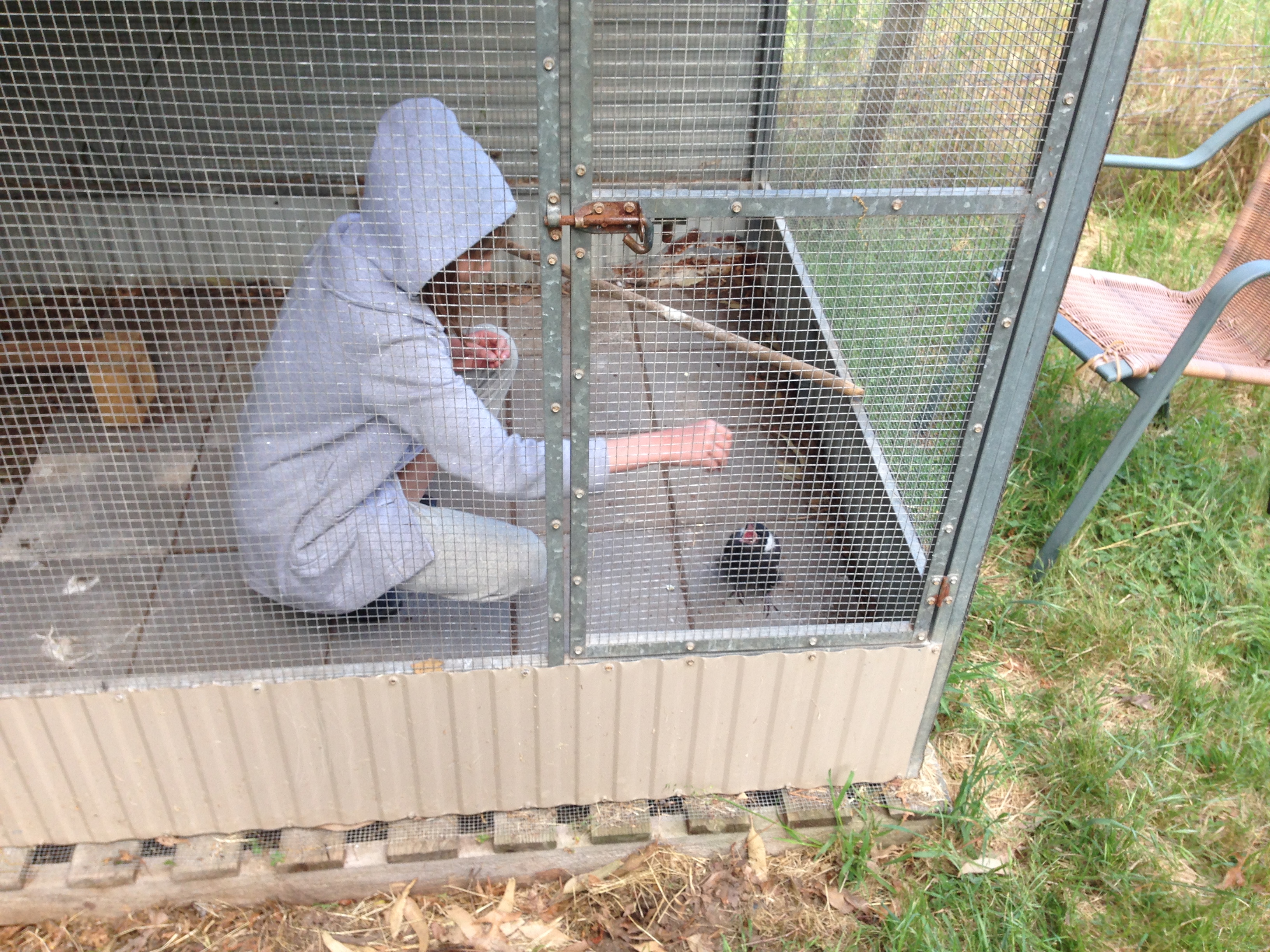
Malteaser was a (SUPERCUTE) young magpie we got called about sometime in December. She had got herself into trouble in the yards of a gas centre! She had been placed out of the nest way too soon, and had come crashing to the ground, along with another baby magpie who didn’t make it. When we picked her up from the gas centre (there were a surprising number of magpies around there) she looked pretty vulnerable and she wasn’t making any noises. We tried to give her some water (success) and a little food (a bit harder), and she took them with a little encouragement.
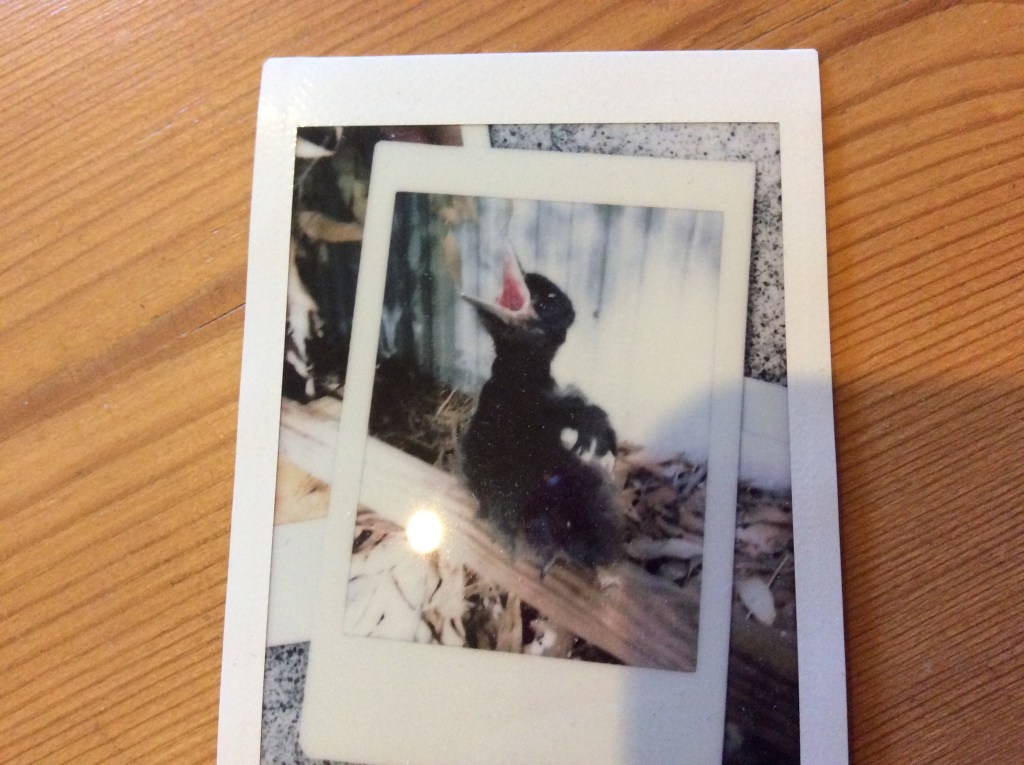
A cute photo of Malteaser begging for food

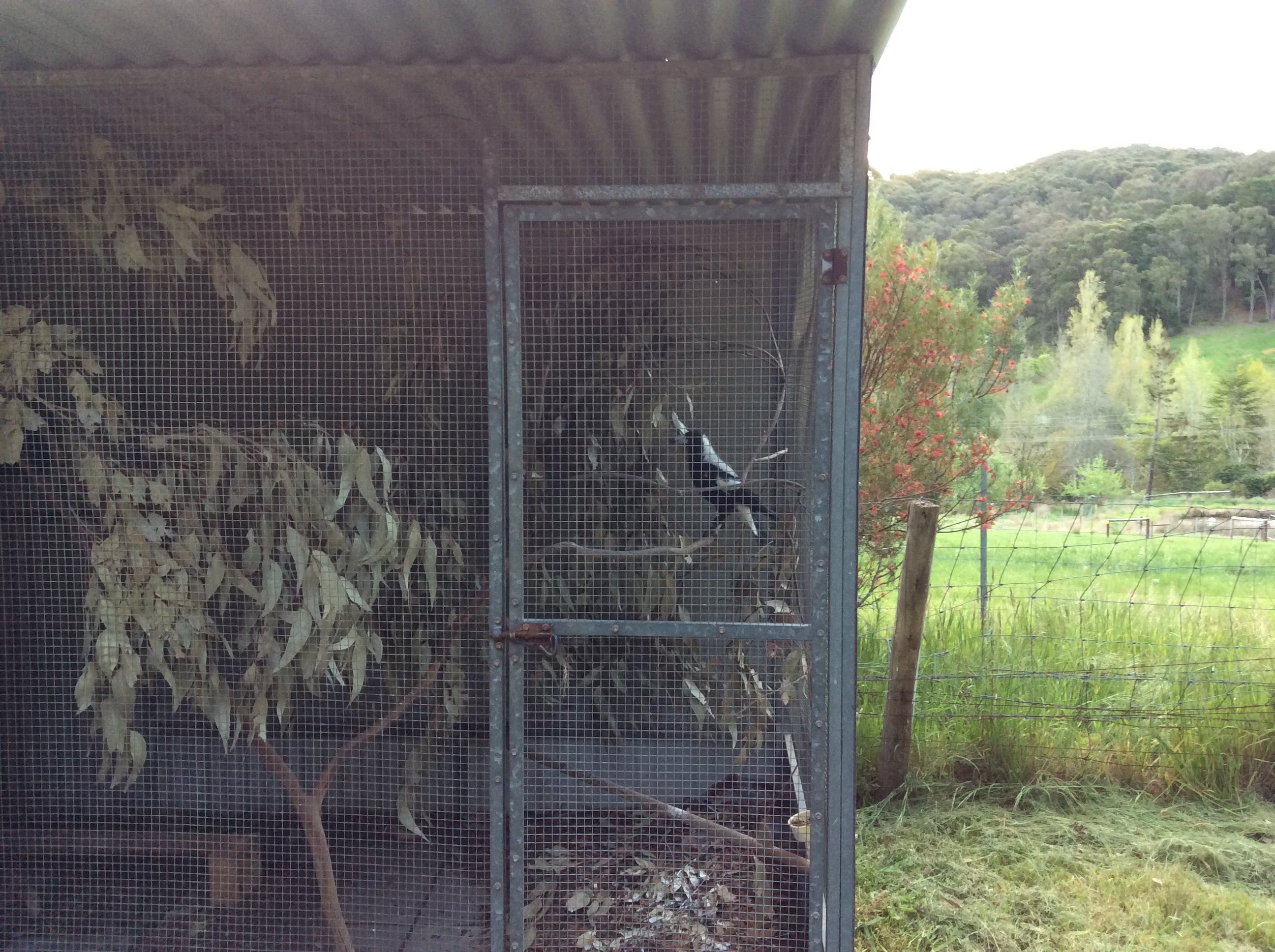
We took her home and put her in the aviary. She was completely fine, with no injuries, but we were going to try to reunite her with her mother when she was well enough. Although, gas centres don’t make the safest environment for young birds!

She was fine with us feeding her the next day, (feeding magpies is SO CUTE, they open their beaks and screech and you drop the meat in…)

We were feeding her with mince covered in insectivore mix, because it gives them the vital nutrients they need, and the occasional couple of worms.

She didn’t seem to be getting the hang of getting food for herself, but if we reunited her with her mother, she would teach him/her. (It’s hard to tell whether they are a boy or girl when they are younger, because females have gray on their backs but so do babies.) So, a week or so later when she was fit and healthy, we took her to a park right next to the gas centre to try and release (I’m just going to call him/her a girl for now) her.

Strangely, there didn’t seem to be many magpies around at that time of day. We put the box containing Malteaser in a fork in the tree and sat and waited a few paces back.

I held food above her head sometimes to make her squawk to attract her mother, but only one magpie started coming close. We held our breath, watching it come closer and closer, but it ignored her little squeaks and went straight for some food we had spilt. We didn’t find her Mum that day.

We had to take Malteaser back to the aviary, but luckily she wasn’t becoming too restless to get out, and seemed ok. We decided we’d try again the next day to release her, but at a different time.

We brought her out at dusk this time, and she flapped out of the box and started exploring (ADORABLE!) and I put her on a tree branch where she settled down and fed her a little, but not too much because we wanted her to squeak for her Mum.

The same magpie came again, but completely ignored her and started digging for worms. Her Mum was nowhere to be seen.

We decided it wasn’t working to reunite her, so we would have to take her home, and raise her until she was old enough to fend for herself…
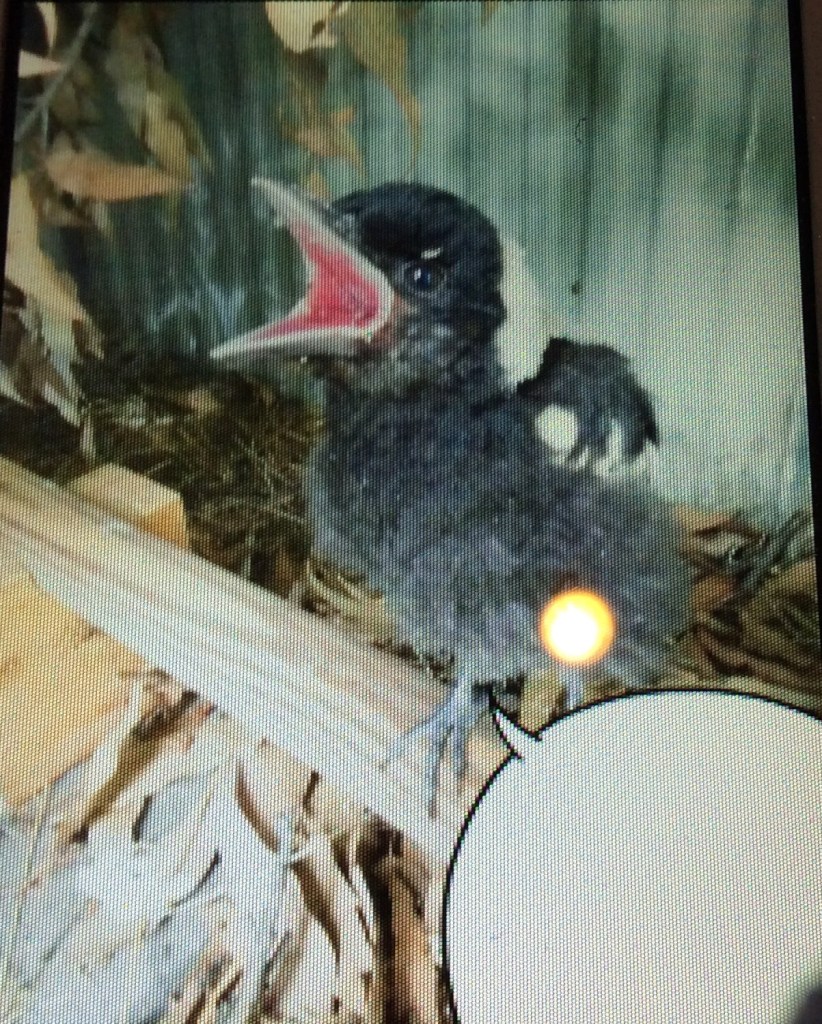
A cute photo of Malteaser SCREAMING for food

We had Malteaser for about another week or two and she was growing really well and practicing trying to fly. Then one day, I came home and my Dad said Malteaser didn’t look good, and that he was afraid she might be dying…

I ran into the aviary to see for myself, and I found Malteaser sitting on the ground. We tried to get her to stand up, but she just kept on sinking back down. I picked her up and felt her legs. They felt like floppy rag dolls, hanging limply.

I was extremely worried about her, and we decided she needed to be checked by a vet straight away, but none of the vets were open because it was late, except for the Emergency one and that was far away. We made our way down that night but, unfortunately they were not able to look at her and so we had to go home again, and we arranged to take her in the morning.

She slept in my room that night, and when I woke up I heard rustling and breathed a sigh of relief. She was still alive…

We took her to the vet, but then I had to go to school and fretfully awaited news, and hoped she would be ok. 

My parents called the school at around lunchtime, and apparently Malteaser was going to be ok! She had broken both her legs, but she wasn’t in pain, and she wouldn’t need to be put down, though she might never be able to go out in the wild again. She must of been trying to fly too high or something, and then crashed…right onto the concrete tiles of the aviary.

At home time, I ran towards our car happily, thinking everything was going to be fine… 

My Dad greeted me and the first thing I said excitedly was “Malteaser is going to be ok!” 

My dad looked grim and said… 

“I’m sorry, but the vet’s checked her again, and it turns out she actually had a big fracture and it would cause her pain later on, and she had to be put down…”

I burst into tears.

******************************************

A few hours later…

We had been called about a baby wattlebird a couple of days before and we said we couldn’t take it because we had Malty, but now…

A Pheonix had risen from the ashes…

Rosita The Rosella

“Broken bones may mend quickly, but brains take time”

QBN

Rosita the Rosella

Hey BirdNerds!!! I’m so sorry I have not written in AGES!!!!
I’ve been pretty busy…
Anyway, here is a story about one of my recent birds. Rosie.

Rosie was found at a nearby school near a path into the bush. One of the students found her there, lying on the side. She was picked up and they called Fauna Rescue. She came to us and we put her straight in the aviary.

With some birds, even if they know how to eat, they don’t know if the food is good or not. They think we are trying to poison them, when we are certainly not. So we had to encourage her to eat but she soon started eating properly. She was a granivore, so she ate mostly seeds and fruit sometimes.

Boy, could she shriek, as she did whenever we went in the aviary with her.

At the time, we thought she had been concussed when she was found. We reckoned she was getting better, well enough to be released. But when we tried, we found she couldn’t fly at all!!! We had to take her back. We waited some more. She was a great climber, but not a great flyer. We thought we saw her fly, though, after a while, so we took her again to be released. The bird seemed fine and its wing did not seem damaged.

We opened the door and she ran out. She flew, but only a little, so that dad could catch her easily. We took her back again. She had definitely improved, but not enough.
We couldn’t work out why she could not use her wing.

We did not give up on her. Soon she started flying more!!! She was getting stronger, and though we thought there may be a problem with her right wing, it looked pretty much fine. So… Third time lucky!!! We were going to try to release her again…

Third time lucky… Or not.
She STILL wasn’t strong enough!!! Only just, though. She wasn’t very good at landing and she couldn’t fly that high. We had no idea why, so we went to the vet. We Were now thinking she may have a broken wing…

You might be thinking she would have to be put down, but…

The vet said she looked fine (there was a huge amount of screeching when the vet held her) and she probably just needed more time. She said it WASNT a broken wing. So, it was a few weeks later when we tried yet again.

You probably we be expecting she had to be taken back again. But no!!! She flew up, up into the trees, perched so high we could barely see her. YAYYYYYYYYYYYYYYYYYY Rosita!!!!!!! Successfully released! She looked happy and at home, and we knew she would be fine. There were lots of other rosellas around, too!

The moral of this is,
In Rositas case, it was nerilogical damage, and that was why she couldn’t fly. Birds take a while to repair from this. It wasn’t damage to her wing, it was kind of like concussion as she had hit her head. She was lucky it was not a broken wing.

We now have a new bird…

Flying Diaries- Lori

Cities are not the best place for birds to live although they are adaptable.

Queen Bird Nerd

Hey guys! You are probably wondering why I have not done a blog post recently. Well, this week I will try to catch up with the weeks I have missed! I will also be doing a Double for my monthly posts; February and March. I have no birds at the moment (Spring is the big season for birds), so I am continuing to tell old stories. I need to renew my membership with Fauna Rescue soon!

Anyway, today I will tell you about a very cute lorikeet. The name, (not very imaginative), Lori.

Lori was found on the side of a road in the city. The person who found her (Let us call them Birdsareawesome) was worried because she was only young and needed more flying practice because she wasn’t doing very well. Birdsareawesome took her to the vet, and they said there were no broken wings or injuries, but she did need time to build up more wing strength.

So that’s where we picked her up. We took her and put her straight in the aviary. Lori started to settle in. We had put lots of branches in so she could easily fly up and land safely. She could already eat by herself, so we left food out for her. Lorikeets are nectivores, so we fed her nectar (of course) and fruit. Lori loved her fruitbars and spent a lot of time chewing on them.

Lori with her beloved fruitbar

Super cute, right?

Anyway, when she was ready for release, we had a problem. We did not know whether to release her where she was found, or at our house. We got some advice from Fauna Rescue and they said that lorikeets were not very territorial, and given the amount of time Lori had spent with us, it was likely that she would not remember where she grew up. We decided to release at ours, therefore, as the city doesn’t really make the best home for a bird. She would probably find more food at our house, and there would be a lot more trees and bushes. So that’s where we released her.

The funny thing about birds is that even if they really want to get out and be released, some take a while to notice the door is open and then they get nervous and will not go out for a long time. Sometimes we have to get in with them and encourage them out. (Such was the case with Lori). This has happened practically every time we release them at our house. (Except for Bingo, but he had just spotted an attractive female(?) lorikeet and was desperate to join her.)

Lori was a good flyer, and we knew she would be fine. She would find a- Hey, what do you call a group of lorikeets? Can someone find that out for me? in no time and hopefully a mate soon! Maybe even some babies…. Squeeeeeeeeeeeeeeee!

Success!*

Queen Bird Nerd

*Five second dance party

Flying Diaries- Charlie Lee and Pamela

Some will make it, and some won’t. Growing up is tricky.

QueenBirdNerd

Today I am doing two similar stories. I have missed a week of Flying Diaries and my monthly issue will be a bit late.

I’ll start with Charlie Lee. Charlie Lee was a baby magpie found at the side of the road by someone we knew. Hmm… I can’t say their name here so let’s just call them Birdfinder. We were not completely sure he was going to survive. We put him in a small cage at first but we got worried he would damage his wings so we put him in the aviary.

He was pretty young and wasn’t able to eat, so we had to encourage him. He soon got the hang of opening his mouth as we popped food inside. He thought I was his mother, and he came running whenever I approached the aviary. Magpies are insectivores, so we fed him worms, insects, and used some of the recipes on the Fauna Rescue website. He started to poke around in the dirt and hay we put out for him by himself, but he still squawked eagerly whenever I came near.

Feeding little Charlie Lee

But Charlie Lee used to feel quite lonely. He was getting better though, although still not very balanced and we decided to try and reunite him with his parents. It was not a struggle to pick him up. He didn’t try to bite, because he trusted us. We took him to where he was found, and put him in a box so his mother would come find him. We waited for ages. Charlie Lee had gotten out but was not doing anything. Finally, we decided to go eat lunch for a while, then come back.

When we got back, Charlie was still there. He still needed his mother to survive, he couldn’t do it alone. So we had to take him back.

I was at camp when my parents decided to take him to the vet as we were still concerned he seemed unbalanced. It turned out that, sadly, he had a badly fractured wing, and had to be put down. It was actually good his parents did not find him, as he would not have been able to survive in the wild. Birds are very lucky if they don’t have a bad break. We have only had one bird that survived with one (Joan Lee). Joan Lee had a single, clean break but Charlie’s wing was shattered.

We now try to take each bird to the vet to be examined, as they may have issues that are hard to detect. Even the vet wasn’t sure with Charlie until they did an x-ray. In every other way, he seemed fine.

Pamela was also a baby magpie, found on the side of the road. She was on a busy road, and needed some flying practice. Other than that, she seemed fine.

We did not need to feed her. She already knew how to eat. We put her straight in the aviary and she was doing fine. We only kept her for a single night as we wanted to reunite her as soon as possible with her parents to give her the best chance of survival.

We were confident she could fly properly, so we took her back to where she was found. Usually, birds take a while to go out of their cages, but she did not take very long at all. She flew onto a birdbath, and we could see she was fine.

Success!

Queen Bird Nerd

PS It is always best to reunite baby birds with their parents as soon as possible. It is very important when picking up an injured baby bird to record exactly where it came from.

Flying Diaries- Joan Lee

Birds with broken wings CAN survive.

Queen Bird Nerd

Joan Lee was an older juvenile magpie who we soon found had a broken wing.

Maybe, some of you are thinking she is not going to survive. And, I don’t blame you for thinking this (Elliot had a broken wing: R.I.P Elliot).

But Elliot’s wing was badly shattered, and Joan Lee’s wing was a clean break.

Joan Lee was a lucky magpie. One of the luckiest we have had (R.I.P Charlie Lee and Charlie Lee 2).

Joan Lee just wanted to get out and be free. She would jump up and try to fly up onto branches. She got confused about why she could not fly. But she kept trying, and she managed to jump onto the first branch (Birds are super smart). She was quite old and could eat by herself.

When we first checked her with the vet, she put a cast on her to support her broken wing. Now we had to take that cast off. It was a hard process, as she had a hard bite and we had to wear gloves. We also had to be careful we didn’t cut her feathering by accident.

A few days after I was checking on her, I noticed she got up in the tree we had put in the aviary! And after that she flew a lot around.

Joan Lee in the tree. Hey, that rhymes! (Well, sorta)

She also had some magpies visiting her that seemed quite friendly.

A bit grainy, but you get the idea.

Finally, we knew it was time for release. We took her back to where she was found and as soon as we unlatched the cage she burst out! At first she was a little dazed, but straight away she started poking in the ground for worms. She found some 😊😊😊

But she still wasn’t flying, so we encouraged her to move. She did. She flew away, up up up into the trees. We were a little worried that the other magpies would have forgotten her and would attack her, but there were no angry calls up from above, so we knew she was fine.

Success!

Queen Bird Nerd

P.S Joan Lee was with us for four weeks. We had to release her in her former habitat because magpies are very territorial. She lived on a diet of insects, meat, and water.

PP.S We named Joan Lee John Lee at first because this was the name of the person who found her; we thought she was a boy! The way to tell is if they have more grey on their back, then they are females. A male would have pure white down the back of the neck. Magpies would also have grey on their backs if they were a fledgling or old bird.

Flying Diaries-Mondo

Some birds can be aggressive to others, watch out for the Noisy Miners!

QBN

Hi Readers, and welcome to the second Flying diaries!!!

This Story is about a wonderful little bird named Mondo.

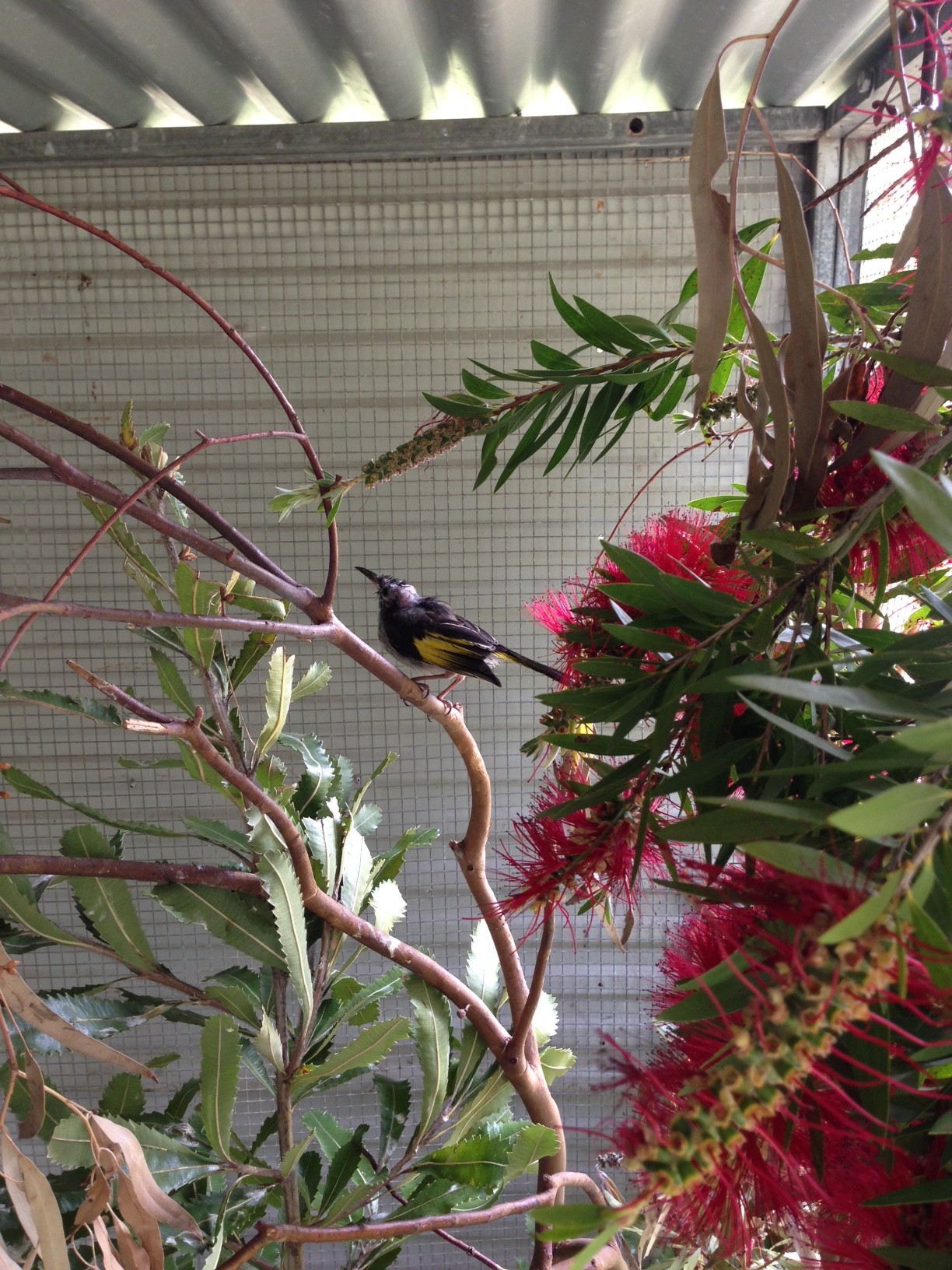
Mondo was a baby New Holland Honeyeater who was attacked by Noisy Miner birds. He was stripped of all his feathering and near death. Luckily, he was found by a nice lady who took him inside and treated him. She did an excellent job in bringing him back to health and he started
eating nectar from a teat pipette by himself. Though he was older, he was still bald.

Just got a haircut

The kind lady then needed a bigger cage to keep him in so he would build up more flying skills. So she gave him to us. We put Mondo in the aviary and he made excellent progress. He stayed bald for a while though, but when his feathers grew back more we released him at our house. We had him for about a month.

Growing more hair and growing stronger every day

We had heard honeyeaters could grow quite attached to people… and that was right! Mondo was having trouble finding food at first as there was less native food around in Summer. He was delighted to spot us again when we walked past him! He flew straight at us! He was desperate for food. We got him some fresh nectar and placed it on the outside of the aviary and he flew to perch on the tub and drank up the food. He had come back for us! We started leaving out food for him and he took it each day. But soon, he was coming back less and less. And then, when the native flowering gums came out, he stopped coming altogether.

We knew he had joined a group and maybe even found a mate!

Success!!!!!!!

Queen Bird Nerd

Bird Diets

Hey Bird Nerds!

Today I am posting my VERY FIRST big monthly blog post! Yay!

The subject this month is BIRD DIETS!


Know your bird, know your food!

QBN

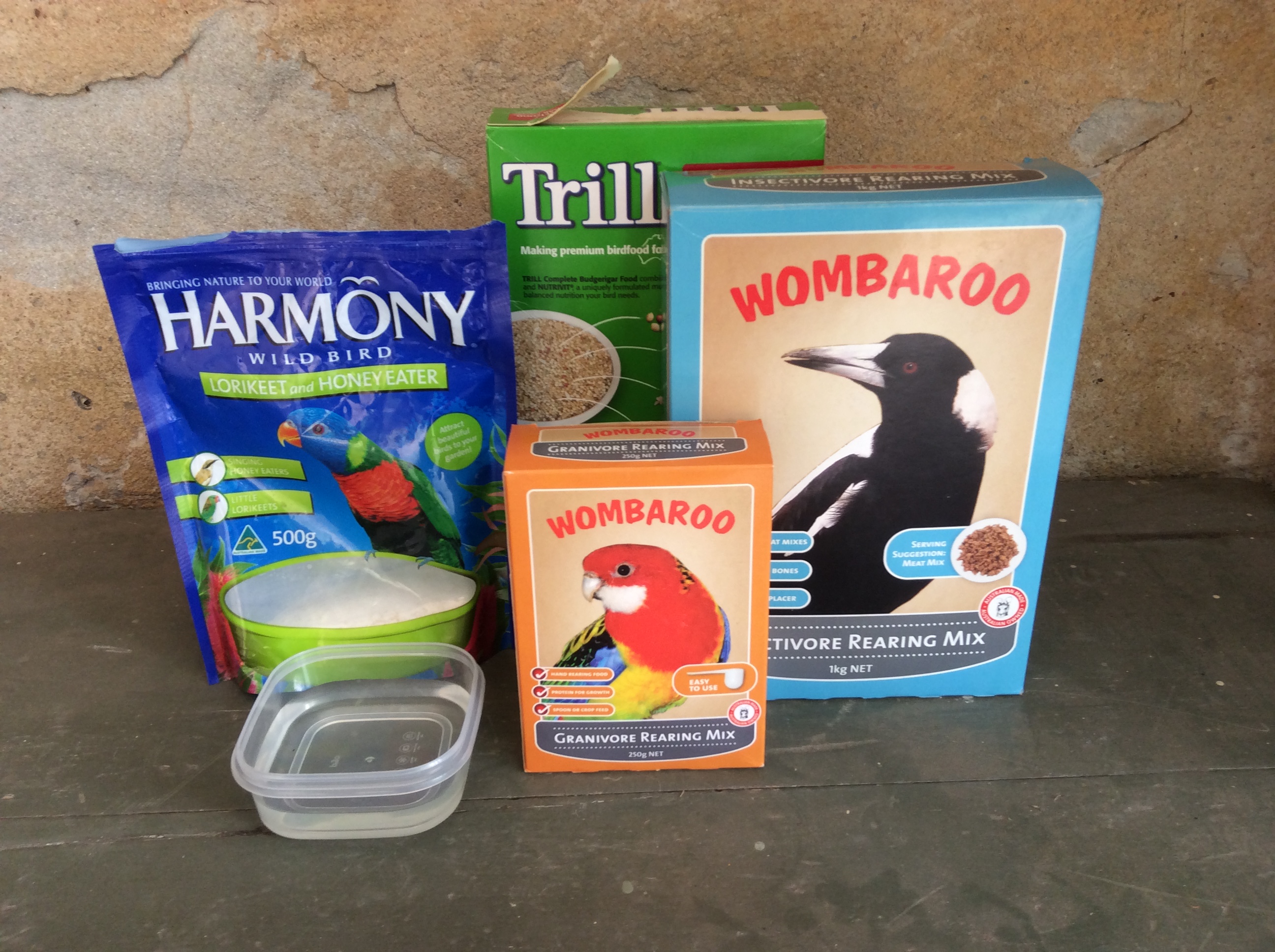
There are three main types of feeders when it comes to birds; Insectivores, Nectivores and Granivores. There’s actually more, but I’m not talking about water birds or raptors at the moment.

A magpie is an insectivore. So are some little birds like wrens and swallows and, of course, the kookaburra. They eat flying insects, worms, ants, grubs, mites and other small insects. When in captivity or rehabilitating, they may need a top up of mince to get their protein.

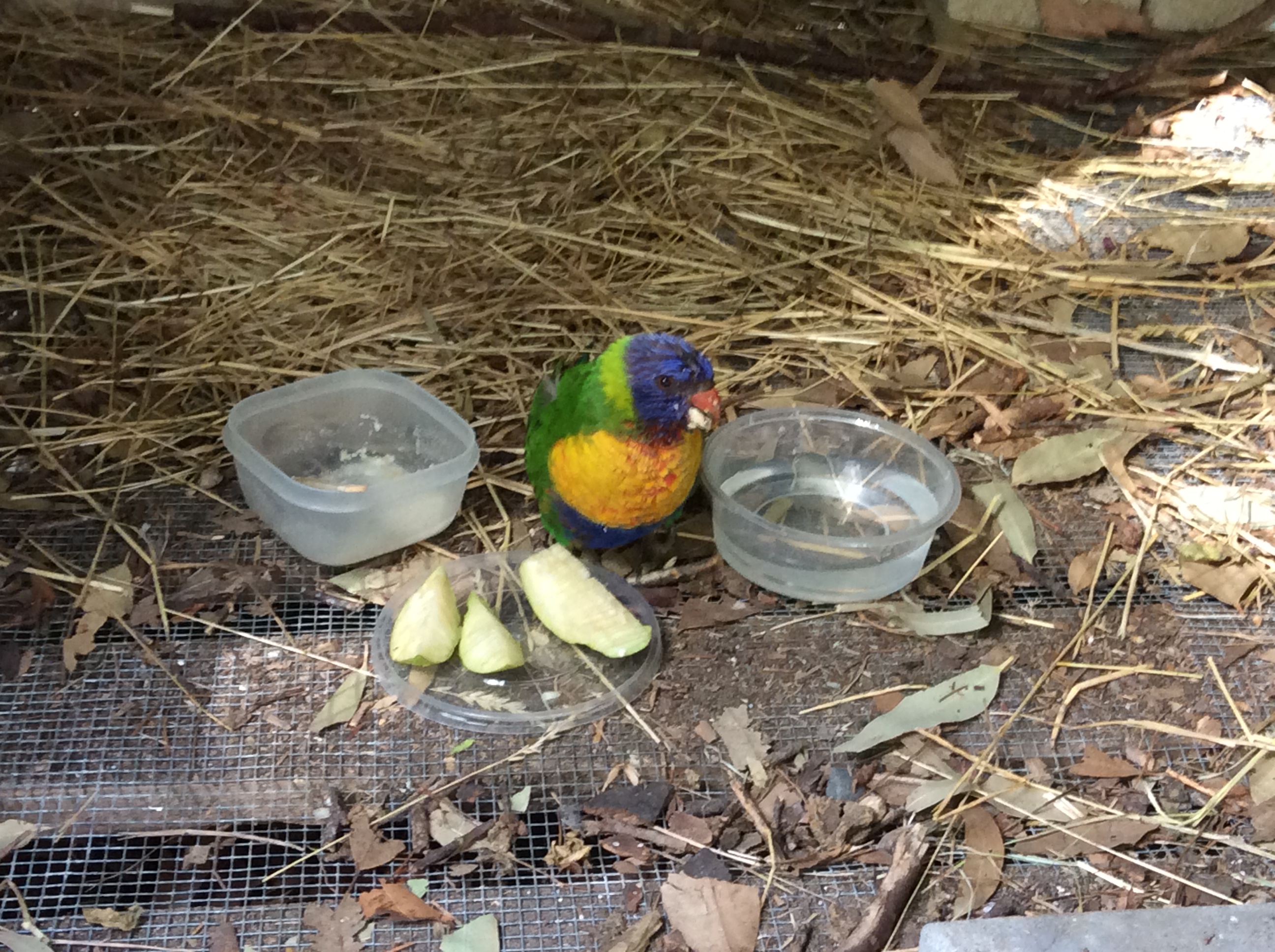
A lorikeet is a nectivore. So is a honeyeater. They eat nectar, and some fruits. Be careful to introduce fruits they are likely to find in their environment. We discovered our rosella loved watermelon but I’m not sure where he will find them in the future!

A Rosella is a granivore. So are cockatoos. And, most types of parrots. They like seeds, and flowers and fruit (note comment above).

Today, I have included a link to the Fauna Rescue SA website so you can check out some simple recipes for your birds. Click on the heading “Birds” and check it out.

At the moment, we have a granivore (Elliott the Rosella) in our aviary and I took a photo of his food. You also may have seen what we fed my lorikeet, Bingo, as the nectar got a little sticky around his beak (Flying Diaries).

Your bird should always have access to clean water, but make sure they cannot drown in it.

You may have to encourage your bird to feed at first, but soon it should get the hang of it. If it’s a young bird, or injured, sometimes a teat pipette comes in handy.

Try to make your cage as natural as possible. Put in flowers and dirt and lots of perches for the bird to practice flying. If the bird is a nectivore, it will enjoy feeding on flowers and fresh fruit, and if it is an insectivore it will enjoy poking around in the dirt to find worms. This way, they will not lose their natural instincts to forage for food.

Queen Bird Nerd

Flying Diaries – BINGO

Fun Fact: Birds can get concussion too! If your bird is acting strangely, he may have bumped his head.

QBN
Bingo with his gourmet selection of canapes and crusty beak

Bingo was an adult lorikeet found at the side of the road. It was suspected to have been hit by a car. Since he was lying on the side of the road in the hot sun for a long time he was also very dehydrated. We checked him over and there was no sign of blood. Then we (with a useful teat pipette) fed him lots of nectar so he was hydrated. We were not sure he was going to live.

But soon, after a few days, Bingo got the hang of grasping the teat pipette and sucking up the nectar. Then, he learned to take it from a small bowl. These were all signs he was getting better.

But Bingo was acting strangely. He would let us come up close to him, even stroke him. He also wasn’t flying or moving very much. This led us to the conclusion that he may have had a concussion.

We were getting worried so we took him to the vet, who checked him and confirmed he COULD have had concussion, but after a few weeks he should be fine.

That visit jerked something in Bingo’s mind. He then wouldn’t let us go near him. He started to move more and behave normally. He started climbing more. We still weren’t sure he could fly though.

After a few weeks, close to the day we were going to release him, another lorikeet came to visit. It was on it’s own. Perhaps it wanted Bingo to be it’s mate.

We decided to release him then and there. I walked over and opened the aviary door. It didn’t take him long to realize he could get out. He jumped out and flew to the nearest tree. Next, he started walking on the dog’s yard fence. Finally, he stretched his wings and flew off to the property next door.

Bingo on the dog enclosure fence

We had released him successfully!

Queen Bird Nerd

PS Now is the time when the flowering gums are out. The lorikeets love it!